
Your Cart is Empty

What Actually Makes an Air Purifier Commercial Grade?

5 min read

The term “commercial grade” surfaces frequently in the air purification industry, yet its meaning can vary considerably depending on the manufacturer and product.
Too often, “commercial grade” is used as a marketing catchphrase rather than a reflection of genuine performance or reliability.
A true commercial-grade air purifier is engineered for larger spaces, longer daily runtimes, and higher air turnover in offices, clinics, conference rooms, and other professional environments. It’s not simply about adding a HEPA filter or making the unit larger. What matters is whether the system can deliver consistent performance in real-world use.
So, what actually separates a professional-grade air purifier from a standard home model?

Higher Airflow and Better Air Exchange

Airflow is one of the clearest differences.
Workplaces usually demand more air movement than homes. Offices, clinics, and shared spaces often have higher foot traffic, more activity, and more airborne particles throughout the day.
This is where ratings like CADR, or Clean Air Delivery Rate, become important. A capable air purifier should move enough air to refresh the room multiple times per hour.
Some units advertise impressive room size claims but move surprisingly little air in practice. Even if the paperwork suggests adequate coverage, insufficient airflow can compromise daily effectiveness.
Consistent airflow is just as important as filtration quality.
While specifications vary by product, commercial-grade systems are generally designed around different priorities than residential models.
Feature Typical Home Air Purifier Commercial-Grade Air Purifier
Intended Use Bedrooms and smaller rooms Offices, clinics, shared spaces
Airflow Lower airflow output Higher airflow for larger areas
Daily Runtime Intermittent use Extended daily operation
Noise Priorities Bedroom quietness Balanced airflow and workplace comfort
Filtration HEPA-focused HEPA + activated carbon common
Odor Control Limited on many models Often stronger carbon filtration
Maintenance Occasional filter changes Designed for practical long-term use
Room Coverage Smaller enclosed rooms Larger open environments
Build Focus Residential convenience Continuous professional use
On mobile, swipe sideways to view the full comparison.

Why Room Coverage Ratings Can Be Misleading

Room coverage numbers are useful, but they do not tell the whole story.
Many air purifiers advertise “up to” coverage claims based on ideal conditions, maximum fan speed, or a limited number of air changes per hour. In real workplaces, performance can be affected by ceiling height, occupancy, open floor plans, furniture placement, and how loudly the unit can run without becoming distracting.
That’s why airflow and real-world usability matter more than oversized room-size claims alone.

Engineered for Demanding Daily Use

Most residential air purifiers are designed for lighter, intermittent use — often a few hours in bedrooms or living spaces.
Professional environments have different requirements. Offices and clinics may need air purification across full workdays, sometimes continuously.
A commercial-grade purifier should maintain stable airflow and controlled noise levels during extended operation. Motor quality, fan design, and internal airflow design all contribute to long-term reliability.

Filtration Beyond Basic HEPA

HEPA filters are highly effective at capturing airborne particles, but workplaces often face a broader range of air quality concerns.
Many workplaces encounter:
  • Unwanted odors
  • VOCs from office equipment or furnishings
  • Residual smells from cleaning products
  • Shared indoor air between rooms or work areas
  • Increased dust from higher occupancy
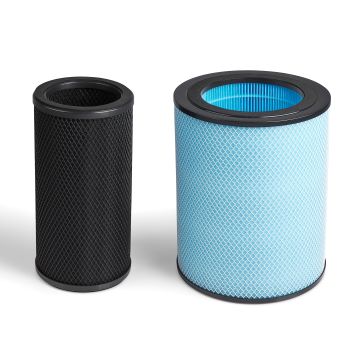
That’s why many office and clinic purifiers combine HEPA filtration with activated carbon. HEPA filtration targets airborne particles, while activated carbon helps address odors, VOCs, and certain gaseous pollutants.
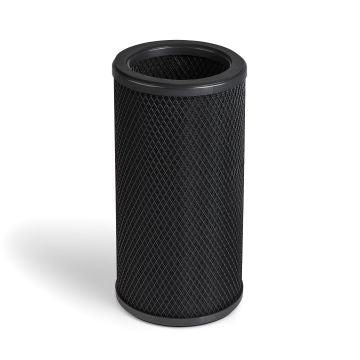
The amount and quality of carbon matter. Thin carbon sheets are often limited, while substantial granular carbon can provide more meaningful odor reduction.

Noise Matters More Than People Think

A purifier can have strong airflow numbers and still fail in real life if it’s too loud.
If a purifier becomes distracting during meetings, calls, or patient interactions, people often turn the fan down or switch the unit off. Once that happens, performance becomes much less meaningful.
A good workplace air purifier should balance airflow with everyday usability. Quiet operation at low and medium speeds is often more important than a powerful top speed that rarely gets used.

Continuous Use Requires Practical Filter Design

Workplaces also place more demand on filter systems.
Filters should be:
  • Accessible
  • Easy to replace
  • Reasonably priced
  • Available consistently
If filters are expensive, hard to access, or difficult to replace, maintenance often gets neglected. Long-term ownership cost matters just as much as the upfront purchase price.

Ozone-Free Operation and Certifications

Some air purifiers generate ozone or rely on ionization, which may not be ideal for occupied professional environments.
That’s why many offices and clinics look for ozone-free air purifiers. Certifications and testing can also provide added confidence. For example, CARB certification helps verify that an air purifier meets California ozone emission limits.
Independent testing, safety certifications, and clear performance specifications are also signs of a professionally designed product.

Real-World Design Matters

Specifications matter, but real-world usability matters just as much.
Important design factors include:
  • Stable airflow direction
  • Durable housing materials
  • Clean aesthetics for professional spaces
  • Reasonable footprint size
  • Ease of mobility
  • Simple controls
  • Filter accessibility
Placement matters too. Units pushed into corners or hidden behind furniture may struggle to circulate air effectively throughout the room.
Appearance also matters in modern offices, clinics, and reception areas where design and professionalism are part of the environment.

Who Actually Needs a Commercial-Grade Air Purifier?

Not every space requires a higher-performance air purifier.
However, stronger air purification is often beneficial in:
  • Offices
  • Dental clinics
  • Medical practices
  • Waiting rooms
  • Conference rooms
  • Wellness spaces
  • Shared workspaces
  • Reception areas
  • Retail environments
Larger rooms with more people usually benefit from stronger airflow and more consistent filtration than smaller home-oriented systems can provide.

Final Thoughts

The term “commercial grade” should mean more than marketing.
A true commercial-grade air purifier is built for strong airflow, reliable long-term operation, quiet daily use, and real-world performance in professional spaces.
For offices and clinics, airflow, filtration quality, usability, and long-term operating costs often matter more than oversized room claims or flashy specifications.

Frequently Asked Questions

What does commercial-grade mean for an air purifier?

Commercial-grade generally refers to systems designed for larger spaces, longer runtimes, higher airflow demands, and professional environments like offices and clinics.

Are commercial air purifiers louder?

Not necessarily. Some are designed to balance strong airflow with quieter operation suitable for workplaces and shared environments.

Is HEPA enough for office air purification?

HEPA filtration is highly effective at capturing airborne particles, but many offices also benefit from activated carbon filtration for odor control and VOC reduction.

Can a home air purifier work in an office?

Smaller home units may work in very small offices, but larger professional spaces often require stronger airflow and longer-duty operation.

Do commercial-grade air purifiers remove odors?

Systems with substantial activated carbon filtration can help reduce many common indoor odors and VOC-related smells.

How important is CADR in commercial spaces?

CADR helps indicate how much clean air a purifier can deliver. Higher airflow is often important in larger or more densely occupied environments.