
Your Cart is Empty

Can HEPA Filters Remove VOCs and Chemical Odors?

2 min read

HEPA filters are well-regarded for capturing airborne particles such as dust, pollen, smoke, and allergens. They help create cleaner air in everyday environments, including offices and homes. However, HEPA technology by itself isn’t designed to remove most chemicals, gases, or odors.
Knowing the difference between particle filtration and gas filtration helps you choose the right air purifier for your home or workspace.

What HEPA Filters Actually Remove

HEPA stands for High Efficiency Particulate Air. A true HEPA filter is designed to capture extremely small airborne particles, including:
  • Dust
  • Pollen
  • Pet dander
  • Mold spores
  • Smoke particles
  • Certain bacteria and airborne particles
High-quality HEPA filters can trap particles as small as 0.3 microns with impressive efficiency.
That’s why HEPA filtration is a trusted solution for boosting everyday indoor air quality.

What HEPA Filters Do Not Remove

While HEPA filters are excellent for particles, they are not designed to remove:
  • Chemical fumes
  • VOCs (volatile organic compounds)
  • Gases
  • Strong odors
  • Airborne chemicals from paints or cleaning products
These substances behave differently from particles and need a different filtration approach.
For example, if a room smells strongly of chemicals, cleaning agents, smoke, or musty odors, a HEPA filter alone may not fully address the issue.

What Removes Chemicals From the Air?

Activated carbon filtration is a proven, ozone-free method to help reduce odors, gases, and certain airborne chemicals in indoor spaces.
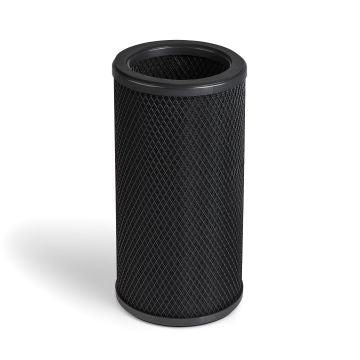
Carbon filters work differently from HEPA filters. Instead of trapping particles, activated carbon attracts and holds gases and odors through a process called adsorption.
This is why many modern air purifiers combine:
  • HEPA filtration for particles
  • Activated carbon for odors and gases
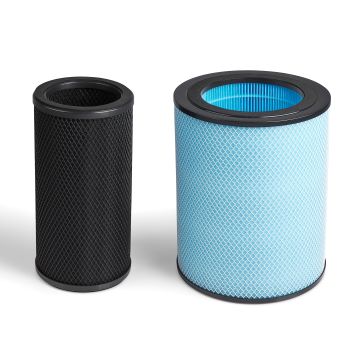
Together, HEPA and activated carbon offer a thoughtfully designed air purification approach—one that supports cleaner air and quieter performance in everyday environments.

Why Some Air Purifiers Still Struggle With Odors

Not all carbon filters are equal.
Some air purifiers use thin carbon sheets or light coatings, which offer only modest odor reduction. Larger, high-quality granular carbon filters typically do a better job reducing odors and VOCs over time.
Airflow, room size, and filter design all shape how effective your air purifier will be.

HEPA vs Carbon Filters: Why Both Matter

HEPA and carbon filters solve different problems.
HEPA filtration helps remove:
  • Dust
  • Allergens
  • Smoke particles
  • Airborne particulates
Carbon filtration helps reduce:
  • Odors
  • VOCs
  • Certain gases
  • Chemical smells
Air Quality Concern HEPA Filter Activated Carbon
Dust & Allergens ✓ Effective
Smoke Particles ✓ Effective
Pet Dander ✓ Effective
VOCs & Chemicals ✓ Effective
Odors & Gases ✓ Effective
A thoughtfully designed, ozone-free air purifier often uses both HEPA and activated carbon filtration together for balanced air quality and reliable performance in offices and homes.

Final Thoughts

HEPA filters are highly effective for removing airborne particles, but they are not designed to remove most chemicals or gases on their own.
For environments affected by odors, VOCs, or chemical fumes, an air purifier that combines HEPA and activated carbon filtration may provide more comprehensive air cleaning.
Whether at home, in the office, or in professional spaces, understanding how filters work helps you make informed decisions about your indoor air quality.